

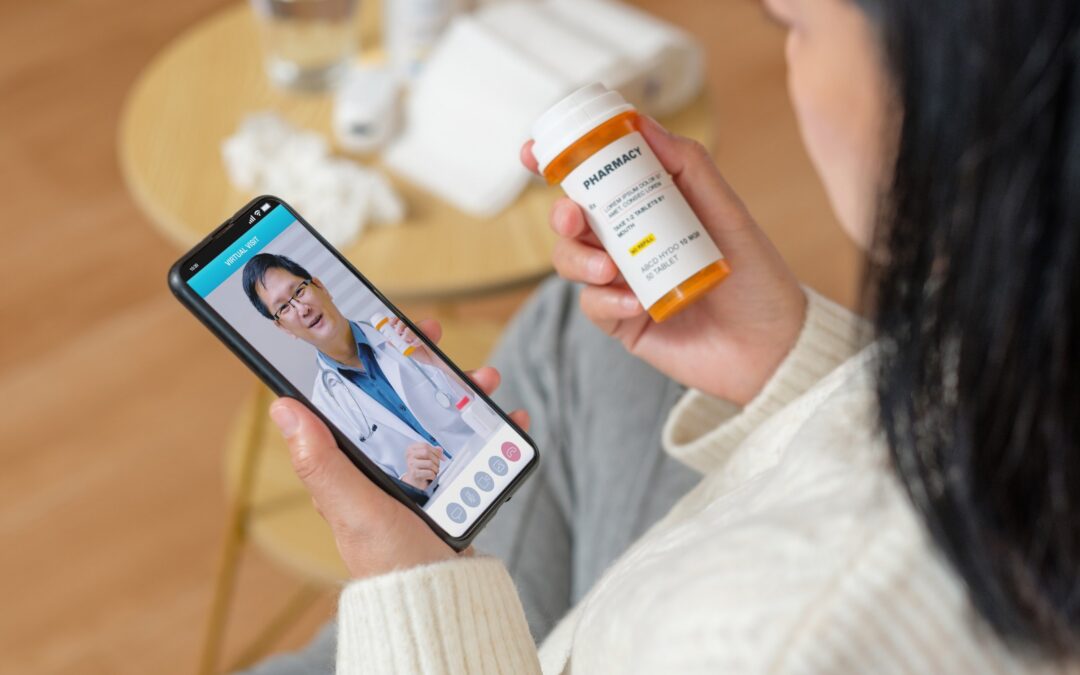
On October 5, 2026, Nolla Health announced what it describes as the nation’s first AI system authorized to issue initial prescriptions. Debuting in Utah through its Nolla Derm app, the platform targets low-acuity dermatology, specifically mild to moderate acne, allowing Utah residents 18 and older to receive AI-issued topical prescriptions for a flat $4.99 monthly fee.
While headlines naturally focus on consumer access and low monthly subscription pricing, this milestone signals a significant shift in clinical care delivery. For healthcare providers, medical group managers, and health system executives, AI-driven initial prescribing could alter clinical workflows, change risk exposure, and redefine the scope of physician practice.
What the Nolla Health Authorization Entails
Nolla’s authorization is not a license or a medical board approval. It is a regulatory mitigation agreement under Utah’s Artificial Intelligence Policy Act (Utah Code § 13-72-401), signed September 22, 2026 by the Utah Office of Artificial Intelligence Policy and the Division of Professional Licensing (DOPL). The agreement runs from October 5, 2026 to October 5, 2027 and may be extended twice. Under it, DOPL agrees not to enforce specified unlicensed-practice and telehealth provisions against Nolla for prescriptions issued within the approved scope. Nolla says it met with the Utah Medical Board before launch, but the board is not a party to the agreement. Within that framework, Nolla Derm’s AI operates under physician-approved clinical protocols to select prescriptions autonomously.
Unlike conventional telehealth tools that use questionnaires to gather patient data before a human clinician makes the prescribing decision, Nolla’s engine evaluates a 10-to-15-minute intake questionnaire and a facial skin scan and then selects the prescription itself. The approved formulary is limited to topical agents (tretinoin, adapalene, clindamycin/benzoyl peroxide, benzoyl peroxide, and azelaic acid combinations). The agreement excludes oral medications, isotretinoin, severe acne, and patients who are pregnant or breastfeeding, among other exclusions. Covered activity includes first-time prescriptions and renewals, sent to a licensed Utah pharmacist.
Structured Oversight Framework
The pilot steps physician oversight down in stages. Each advance requires the Office’s prior written approval and is tied to safety targets in Nolla’s approved proposal, including at least 95% physician concordance, zero missed hard stops, and zero serious adverse events:
- Stage 1 (First 100 Patients): 100% Pre-Issuance Review. Every AI-generated prescription is reviewed and approved by a licensed physician before it reaches the pharmacy. Under the agreement, each Stage 1 prescription is reviewed by two independent Utah-licensed physicians, for a minimum of four weeks.
- Stage 2 (Through 500 Cumulative Patients): Autonomous Issuance with Retrospective Review. The AI issues prescriptions directly, and a physician reviews every case after the fact. Nolla describes this review as daily. The agreement sets a floor of review of all cases at least weekly, for a minimum of eight weeks.
- Stage 3 (After 500 Patients): Sample-Based Audits. The system operates autonomously within the approved scope. Nolla describes weekly sampling. The agreement requires at least monthly retrospective review of a sample covering at least 10% of enrollment, plus full review of any case involving an adverse event or escalation.
To limit clinical scope, the system cannot improvise or write open-ended prescriptions. When a patient’s condition falls outside the protocol’s parameters, or the AI cannot confidently select a treatment, the case is routed to a licensed physician. Patients who message through the app reach a physician, not a conversational AI agent.
The agreement also imposes transparency and reporting duties. Patients must be told they are using generative AI, and must acknowledge that disclosure, before using the service. Pharmacists must be told a prescription was AI-generated and how to reach a physician. Nolla must report adverse events to the Office within 24 hours, file monthly performance reports and quarterly public reports, and maintain professional liability insurance throughout the pilot.
The Provider Impact: Strategic and Operational Implications
Utah’s framework may become a reference point for other states, but it rests on a specific legal tool: a sandbox statute that lets the state temporarily relax licensing enforcement for a defined pilot. Whether other states can replicate it depends on whether they have comparable authority. Healthcare leaders should evaluate how this model affects daily provider operations and clinical responsibilities.
Nolla’s pilot also follows an earlier Utah agreement with Doctronic, signed in October 2025, that allows AI renewal of existing prescriptions for chronic conditions. Nolla’s distinction is that its AI may issue a patient’s first prescription. Physician support for these pilots is not settled: in April 2026, 11 of the 14 members of Utah’s physician licensing board signed a letter urging suspension of the Doctronic pilot, and DOPL and the Office declined, noting they retain authority to modify or cancel it if safety benchmarks are missed.
1. Shift from Routine Visits to High-Complexity Pathology
In Utah, where Nolla reports an average dermatology wait of 61 days and 11 counties without a practicing dermatologist, routine low-acuity cases compete for limited specialist time. If straightforward, low-risk cases move to validated algorithmic pathways, providers could shift their schedules toward complex, high-acuity care, such as skin cancer screening, atypical lesions, and severe inflammatory skin disease, improving specialist utilization.
2. Evolution of Physician Responsibilities to Quality Governance
Under an autonomous initial prescribing framework, part of physician time shifts from individual patient evaluations to systemic quality assurance. Overseeing physicians take on supervisory and governance roles:
- Reviewing audit cohorts, first every case and later samples, to evaluate treatment accuracy and escalations.
- Assessing algorithmic concordance against the agreement’s 95% benchmark. Nolla reports over 96% clinician agreement in real-world cases, a company-reported figure without a published case count or methodology.
- Fine-tuning standardized treatment pathways and adjusting contraindication parameters.
3. Liability and Regulatory Boundaries
A central question for healthcare executives involves medical malpractice and regulatory liability. The agreement sets regulatory guardrails, but it does not shift civil liability away from the company or its physicians:
- Protocol-Bound Decisions: The AI selects only from a pre-approved formulary within defined decision rules, with hard stops that route cases to a physician.
- Pause and Termination Rights: Progression may be paused or reversed if safety concerns arise, and any serious adverse event triggers review and a pause. The Office may terminate the agreement at any time, though termination takes effect after an unwinding period rather than immediately.
- Liability Preserved: The agreement relieves Nolla only from DOPL enforcement of specified licensing and telehealth provisions. It preserves the right of patients and third parties to pursue legal remedies for physical harm, bars terms of service that limit liability for harm from AI outputs, and requires professional liability insurance. Prescriptions carry the overseeing physician’s NPI, so how fault will be allocated among the company, its AI, and its physicians remains an open question.
Key Action Items for Healthcare Practice Leaders
Medical directors and healthcare system administrators evaluating AI-driven clinical pathways can take practical steps to prepare their operations:
- Audit Panel Acuity and Wait Times: Identify low-risk, high-volume conditions within your specialty (e.g., mild acne, simple hypertension follow-ups, uncomplicated seasonal allergies) that currently create scheduling bottlenecks for specialists.
- Review State AI Governance Frameworks: Monitor state legislative and regulatory developments, such as sandbox programs like the one run by Utah’s Office of Artificial Intelligence Policy, to determine whether automated prescribing is permitted and what oversight it requires. Relief granted by one state applies only in that state and does not displace federal requirements.
- Establish Standardized Protocol Pathways: Ensure existing clinical guidelines are codified into strict, decision-tree formats that explicitly outline escalation criteria for human review.
- Update Clinical Supervision Workflows: Prepare clinical teams for a shift in duties from direct routine consultations to audit-based review processes and oversight protocols.
- Confirm Coverage and Accountability: Before supervising or adopting an AI prescribing program, confirm that professional liability coverage extends to AI-issued prescriptions, and document who is responsible for algorithm design, oversight review, and escalations.
How Lengea Can Help
As artificial intelligence continues to reshape healthcare delivery, providers and practice owners must understand the legal and regulatory responsibilities that come with adopting these technologies. While Utah’s pilot represents an important development in AI-driven prescribing, it also raises significant questions regarding physician oversight, professional liability, patient safety, and state licensing requirements. Lengea Law helps healthcare practices navigate emerging regulations, evaluate compliance risks, and develop policies and oversight structures that support responsible innovation. Whether you are considering AI-powered clinical tools, expanding your telehealth services, or reviewing your existing physician supervision arrangements, our team can help you understand your obligations and prepare for a changing regulatory landscape. Contact Lengea Law today to discuss how your practice can embrace new technology while maintaining compliance and protecting your business.
Disclaimer: This article is provided for general informational and educational purposes only and does not constitute legal advice. The information presented reflects developments as of the date of publication and should not be relied upon as a substitute for legal counsel.